Upstate Archives Visits Saratoga: The Mineral Springs That Gave Our City Its Name
Dec 9, 2025
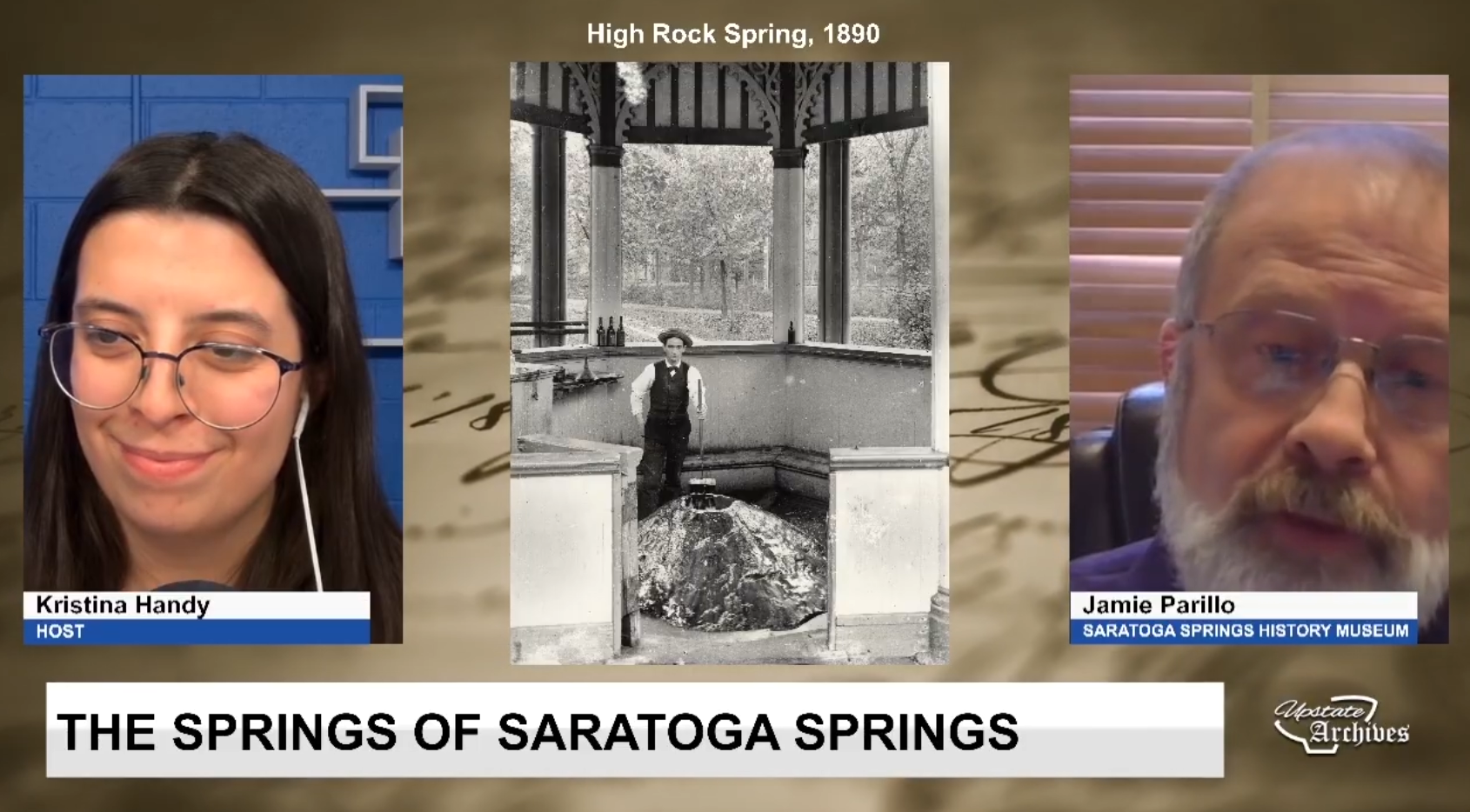
If you’ve ever wondered why Saratoga Springs is called Saratoga Springs, WTEN+’s Upstate Archives recently delivered the perfect deep-dive—spotlighting the remarkable mineral springs that shaped our city’s identity, economy, and reputation for centuries.
We’re grateful to WTEN+ and digital producer Kristina Handy for featuring the Saratoga Springs History Museum in this episode and for helping share this story with viewers across the Capital Region.
A conversation with Jamie Parillo
In the episode, Kristina sits down with Jamie Parillo, Executive Director of the Saratoga Springs History Museum, for a wide-ranging conversation about:
What the museum does (and how it tells Saratoga’s story from the earliest days to the present)
What mineral springs are and why Saratoga’s are so unique
How geology—especially the Saratoga fault—helps bring mineral-rich, naturally carbonated water to the surface
Jamie explains that Saratoga’s springs aren’t just mineral waters—they’re highly carbonated cold-water springs, with carbon dioxide naturally dissolved into the water, making them unusual on a global scale.
Springs known for thousands of years
The episode also highlights that these springs were known long before Saratoga Springs became a destination town. According to Jamie, Native peoples were familiar with the area’s springs for thousands of years, drawn by hunting and fishing grounds and the waters’ reputation for healing.
From “springs near Saratoga” to Saratoga Springs
One of the most fascinating moments in the episode is the reminder that the Battles of Saratoga weren’t fought in what we now call Saratoga Springs. Historically, “Saratoga” referred to the area around today’s Schuylerville—while this area was once known as the “springs near Saratoga,” eventually becoming Saratoga Springs.
How the springs fueled a boom
As more visitors arrived to “take the waters,” Saratoga began evolving into a major health destination. Jamie explains how early publications analyzed spring contents and promoted them for various ailments—essentially turning Saratoga into a wellness hotspot long before modern tourism.
A key turning point: Gideon Putnam’s decision to build near what became Congress Spring (in today’s Congress Park). That bold move helped shift growth and laid groundwork for Saratoga’s transformation into a world-famous resort town.
Protecting the springs: the Anti-Pumping Act
The episode doesn’t shy away from the consequences of popularity, either. As demand for carbon dioxide grew (especially with the rise of the soda industry), companies extracted gas and dumped massive amounts of spring water—depleting reservoirs and threatening the system.
That led to major protections, including the 1908 Anti-Pumping Act, when New York State intervened to shut down harmful pumping and preserve springs for the future.
Springs today—and how you can experience them
The conversation wraps with a look at how the springs function now, how they became connected to the state reservation (today’s Saratoga Spa State Park), and how visitors still enjoy “spring tasting” around town.
And yes—people still fill bottles at springs like Congress Spring, and lines often form at State Seal in the Spa State Park.
Visit the museum
Want to learn more about Saratoga’s springs—and the history they sparked? Visit us at the Saratoga Springs History Museum, located in the Canfield Casino in Congress Park. You’ll find exhibits and interpretation that connect the springs to Saratoga’s broader story—health, tourism, culture, and community.
Thank you again to WTEN+ and Upstate Archives for helping bring this essential Saratoga story to a wider audience.