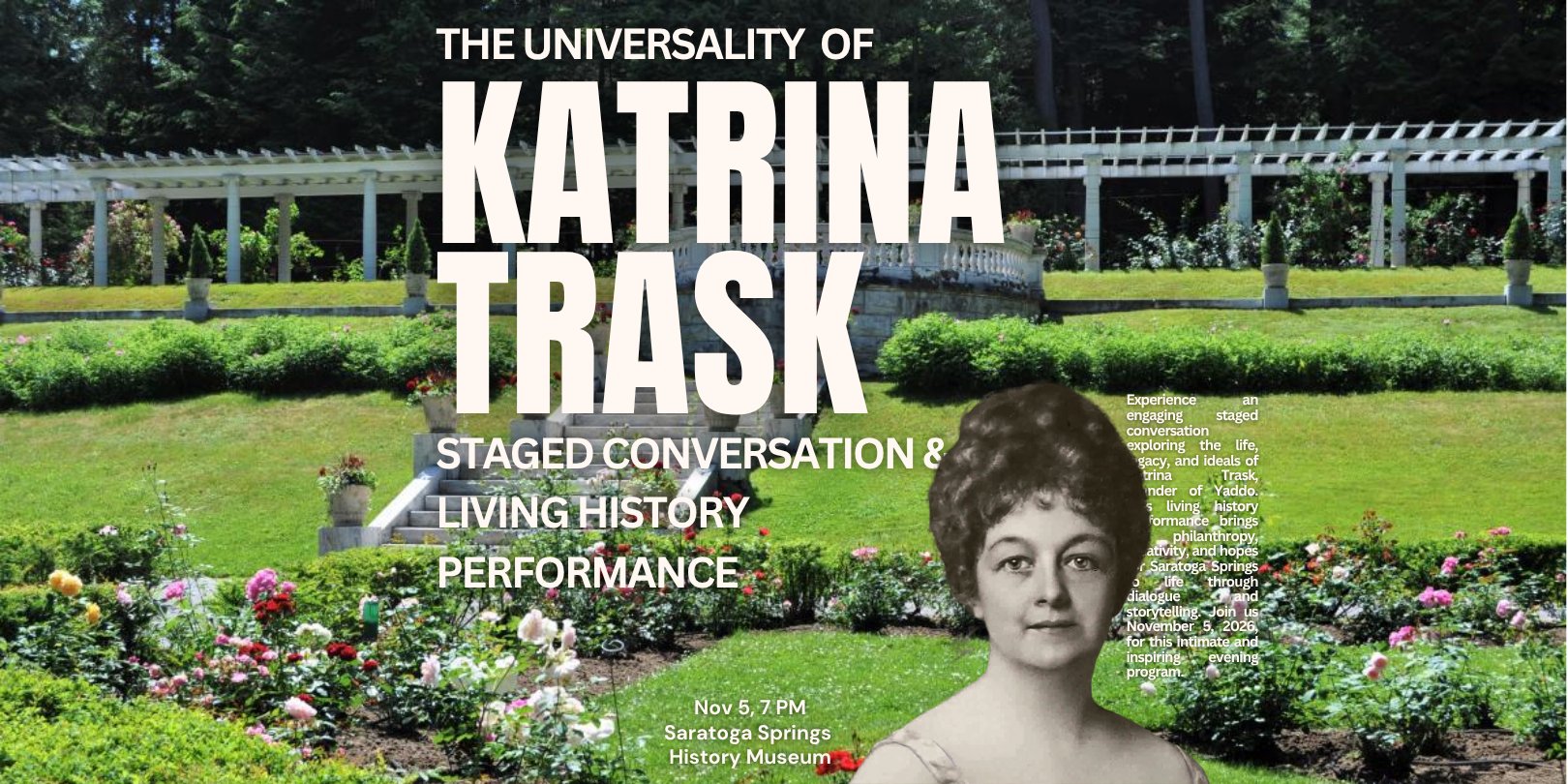
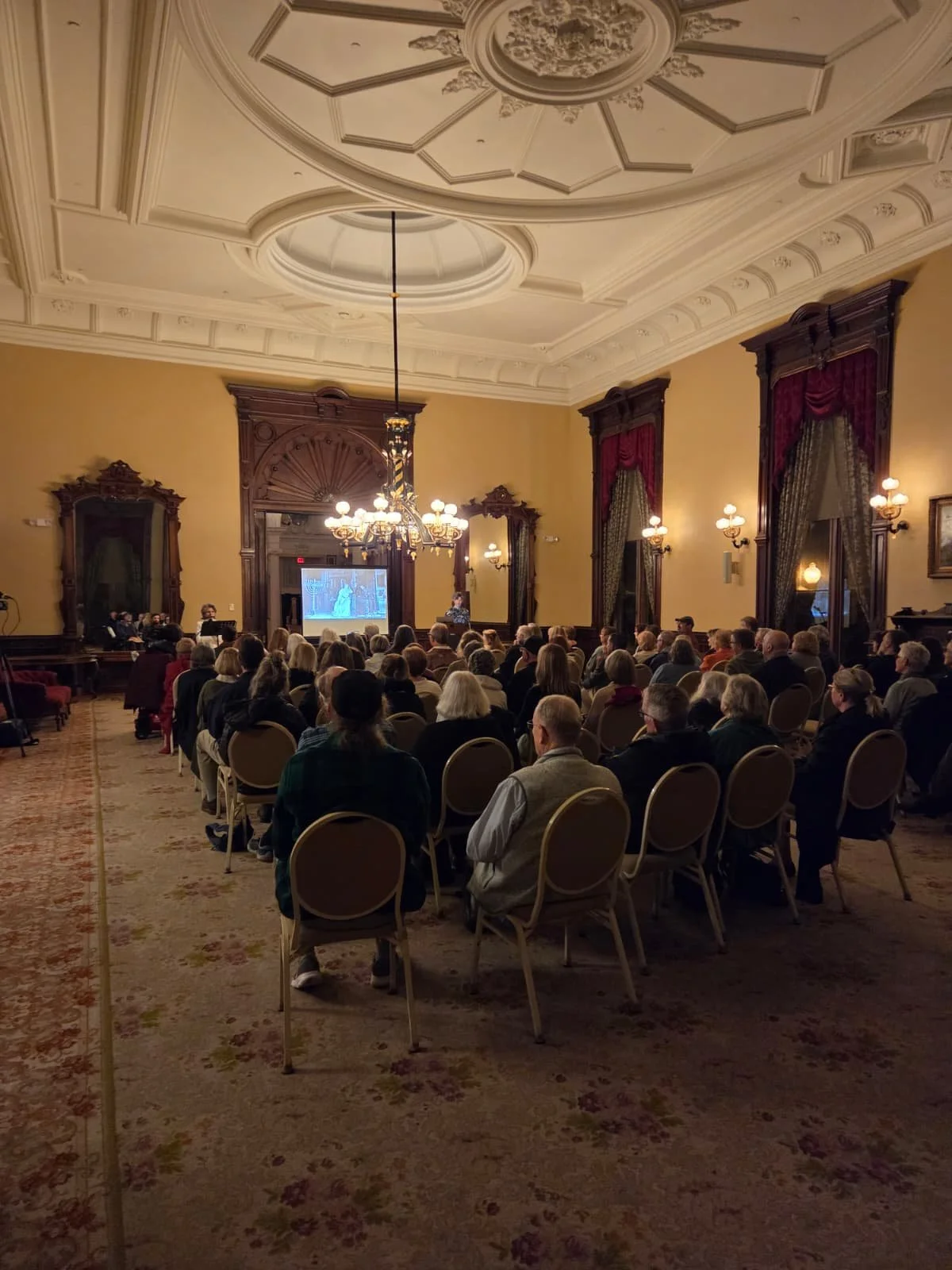
On Thursday, November 5, 2026, the Saratoga Springs History Museum welcomed guests for a memorable evening celebrating the extraordinary life and enduring legacy of Katrina Trask, the visionary philanthropist, poet, reformer, and co-founder of Yaddo.
Presented as the final installment in a three-part series of staged conversations, The Universality of Katrina Trask brought audiences face-to-face with one of Saratoga Springs' most influential historical figures.
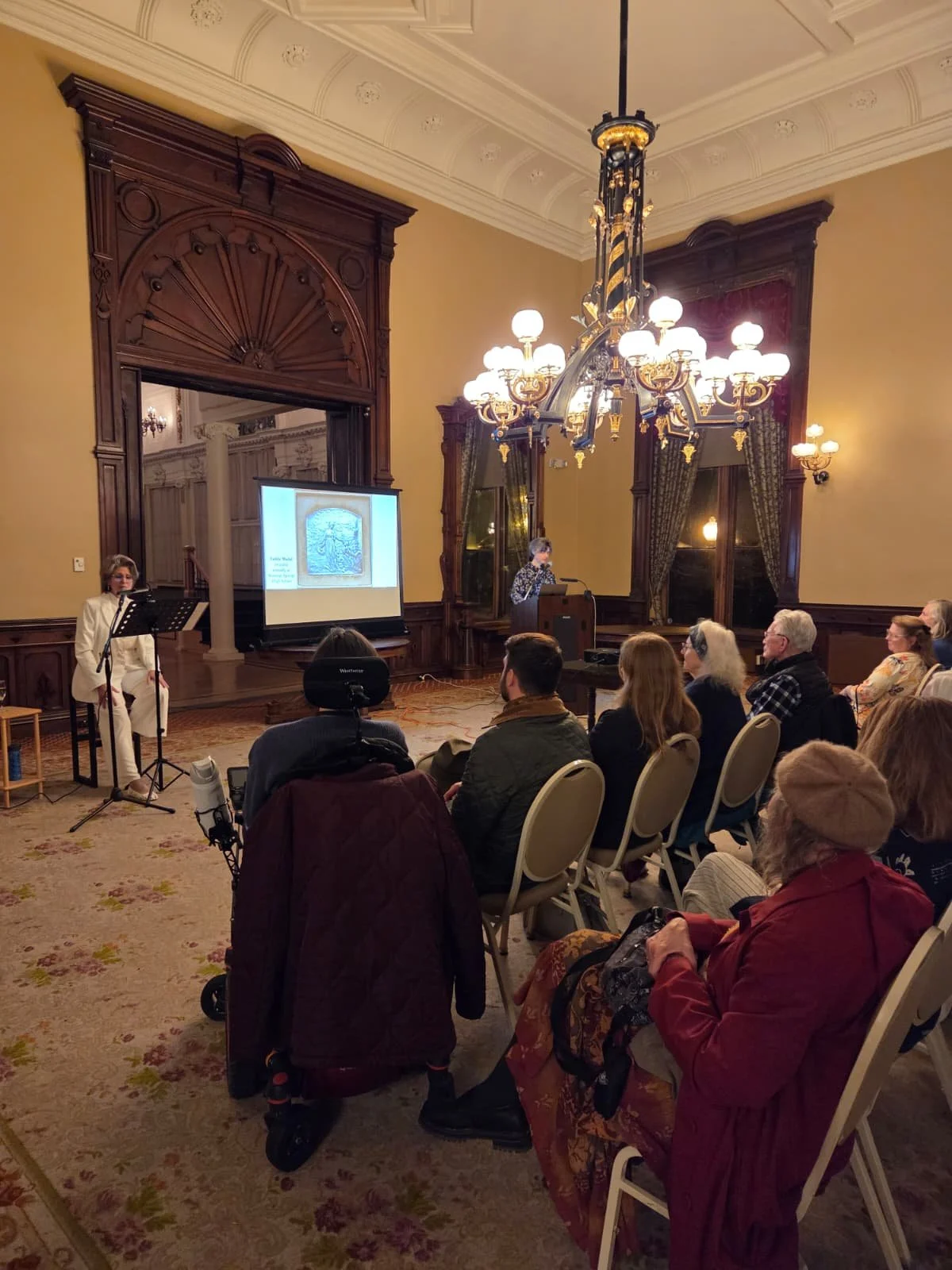
Featuring Lezlie Dana as Katrina Trask and Rumara Jewett as her conversational companion, the performance offered an intimate exploration of Trask's personal experiences, philosophical beliefs, literary achievements, and remarkable contributions to the community.
What made the evening particularly special was its historical authenticity. As explained at the beginning of the performance, approximately 96.5% of the words spoken by Katrina Trask were drawn directly from her own writings, allowing audiences to experience her thoughts and convictions through her original words.
The result was an engaging journey through the life of a woman whose vision continues to influence Saratoga Springs more than a century later.
The Vision Behind Yaddo: A Place of Inspiration
One of the evening's central themes was the extraordinary vision that led Katrina and her husband, Spencer Trask, to establish what would eventually become the renowned Yaddo Artist Residency.
During the performance, audiences learned about a remarkable moment in 1899 when Katrina and Spencer were walking together near their estate.
Katrina described experiencing a sudden realization about the property's future: Yaddo should not simply become another institution, school, or charitable organization. Instead, it should serve as a permanent sanctuary for artistic inspiration.
She envisioned a welcoming home where writers, poets, painters, musicians, and other creative individuals could gather, exchange ideas, and find the freedom to create.
The conversation also explored how this vision inspired the development of Yaddo's beautiful rose garden, completed in 1901, and how the estate's natural surroundings became integral to its artistic purpose.
As Yaddo celebrates 100 years of welcoming artists in 2026, the performance offered a particularly meaningful opportunity to revisit the ideals that inspired its creation.
A Courageous Voice for Peace
Although Katrina Trask is widely remembered for her support of the arts, the evening revealed another important aspect of her legacy: her passionate advocacy for peace.
Through excerpts from her poetry, essays, and theatrical works, audiences discovered a woman who openly challenged the acceptance of war as an inevitable part of human civilization.
Her 1898 poem The Logic of War, written during the Spanish-American War, questioned the morality of responding to violence with further violence.
The performance also explored her influential 1913 play, In the Vanguard, which tells the story of a young soldier who begins questioning the morality of warfare and ultimately refuses to continue killing.
The play attracted considerable attention and was performed throughout the United States, demonstrating the reach of Trask's literary and philosophical ideas.
Her commitment to peace was not without controversy. During the conversation, audiences heard how she faced criticism and hostility for her views, including an incident in which a dinner guest suggested that pacifists deserved to be shot.
Yet Trask remained committed to the belief that genuine courage could be found in restraint, forgiveness, and the ability to overcome one's own anger.
The performance also examined the complexities of her position during World War I, when her opposition to warfare existed alongside her concern for international justice and her support for Americans serving their country.
Spencer Trask and the Transformation of Saratoga Springs
Another fascinating portion of the evening explored the efforts of Spencer Trask to transform Saratoga Springs into a destination recognized for its natural mineral springs, public spaces, and cultural attractions.
At the turn of the twentieth century, Saratoga Springs was widely associated with gambling and seasonal entertainment.
Spencer envisioned a different future: a community that would embrace its mineral waters, natural beauty, and potential as a year-round health destination.
His efforts to protect the springs and promote public access helped lay the groundwork for the preservation initiatives that would eventually shape some of Saratoga's most treasured landmarks.
The conversation also explored Spencer's opposition to illegal gambling establishments and the threats he received because of his reform efforts.
Following his tragic death in a railroad accident on December 31, 1909, Katrina remained deeply connected to his vision for the community.
One of the evening's most compelling stories concerned the creation of the Spencer Trask Memorial and the iconic Spirit of Life sculpture in Congress Park.
Katrina explained how money received following legal action against the railroad was given to the community, which ultimately chose to honor Spencer through a public memorial.
Created by renowned sculptor Daniel Chester French, the Spirit of Life remains one of Saratoga Springs' most recognizable and beloved landmarks.
For those familiar with Congress Park and the historic Canfield Casino, this portion of the performance provided a powerful reminder of the people and decisions that helped shape the Saratoga Springs we know today.
Personal Tragedy, Resilience, and Literary Achievement
The evening also offered an intimate look at the profound personal challenges Katrina Trask endured throughout her life.
The loss of her children, the sudden death of her husband, and years of serious health difficulties deeply influenced her writing and spiritual outlook.
Despite suffering from heart problems and deteriorating eyesight, Trask continued to produce poetry, plays, and essays.
The performance explored how some of her most important literary achievements emerged during periods of extraordinary physical and emotional suffering.
Among the works discussed was King Alfred's Jewel, a historical play published in 1908, as well as In the Vanguard, which she wrote following a prolonged period of grief after Spencer's death.
These stories revealed not only Trask's resilience but also her conviction that art and creative expression could emerge from even the most difficult human experiences.
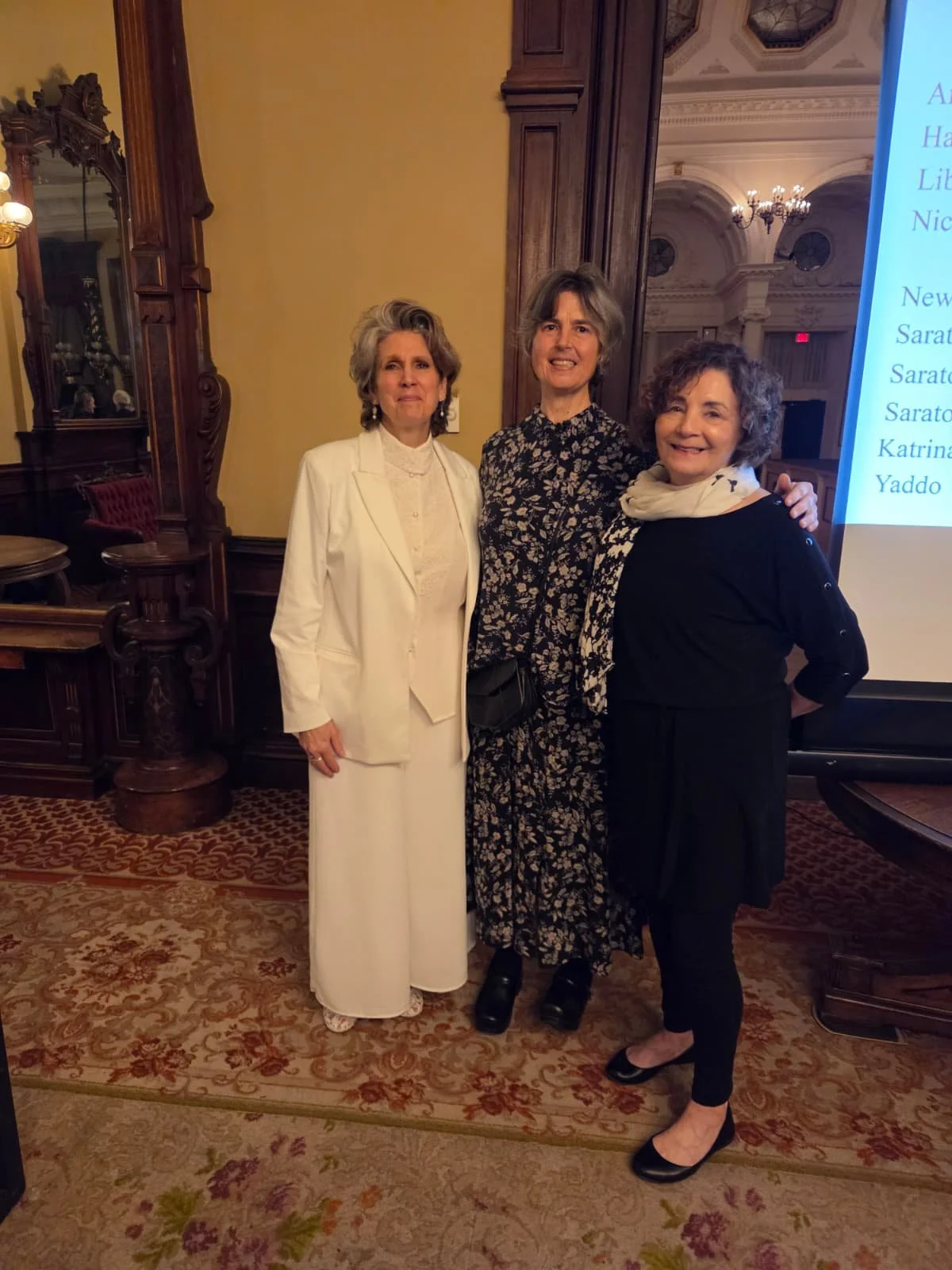
Lezlie Dana, Rumara Jewett, & Eileen Mack
Women's Suffrage, Democracy, and Social Progress
The conversation also explored Katrina Trask's views on democracy, women's rights, and the women's suffrage movement.
Although she believed women should have the right to vote, Trask initially hesitated to join the organized suffrage movement, believing that society also needed to recognize and cultivate women's broader intellectual and spiritual contributions.
Her perspective evolved during World War I as she witnessed women undertaking demanding responsibilities in support of their communities and the war effort.
In 1917, she formally joined the women's suffrage movement, recognizing the importance of political representation in enabling women to fulfill those responsibilities.
Through this discussion, audiences gained a more nuanced understanding of Trask as a historical figure whose convictions were both deeply held and capable of evolving in response to the world around her.
Preserving Beauty and Creativity for Future Generations
Perhaps one of the most moving themes of the evening was Katrina Trask's belief that art and beauty become even more essential during times of hardship.
During World War I, the future of the planned artist residency at Yaddo became uncertain.
Trask questioned whether it was appropriate to devote resources to artistic inspiration while so much of the world was experiencing suffering and destruction.
Ultimately, however, she came to believe that preserving beauty, creativity, and intellectual life was more important than ever.
She recognized that while wars and political conflicts might eventually fade into history, great works of art could continue inspiring humanity for generations.
That conviction helped sustain her determination to preserve Yaddo's future.
Today, as the Yaddo Artist Residency marks its centennial, her vision remains a remarkable example of the lasting power of philanthropy, creativity, and cultural preservation.
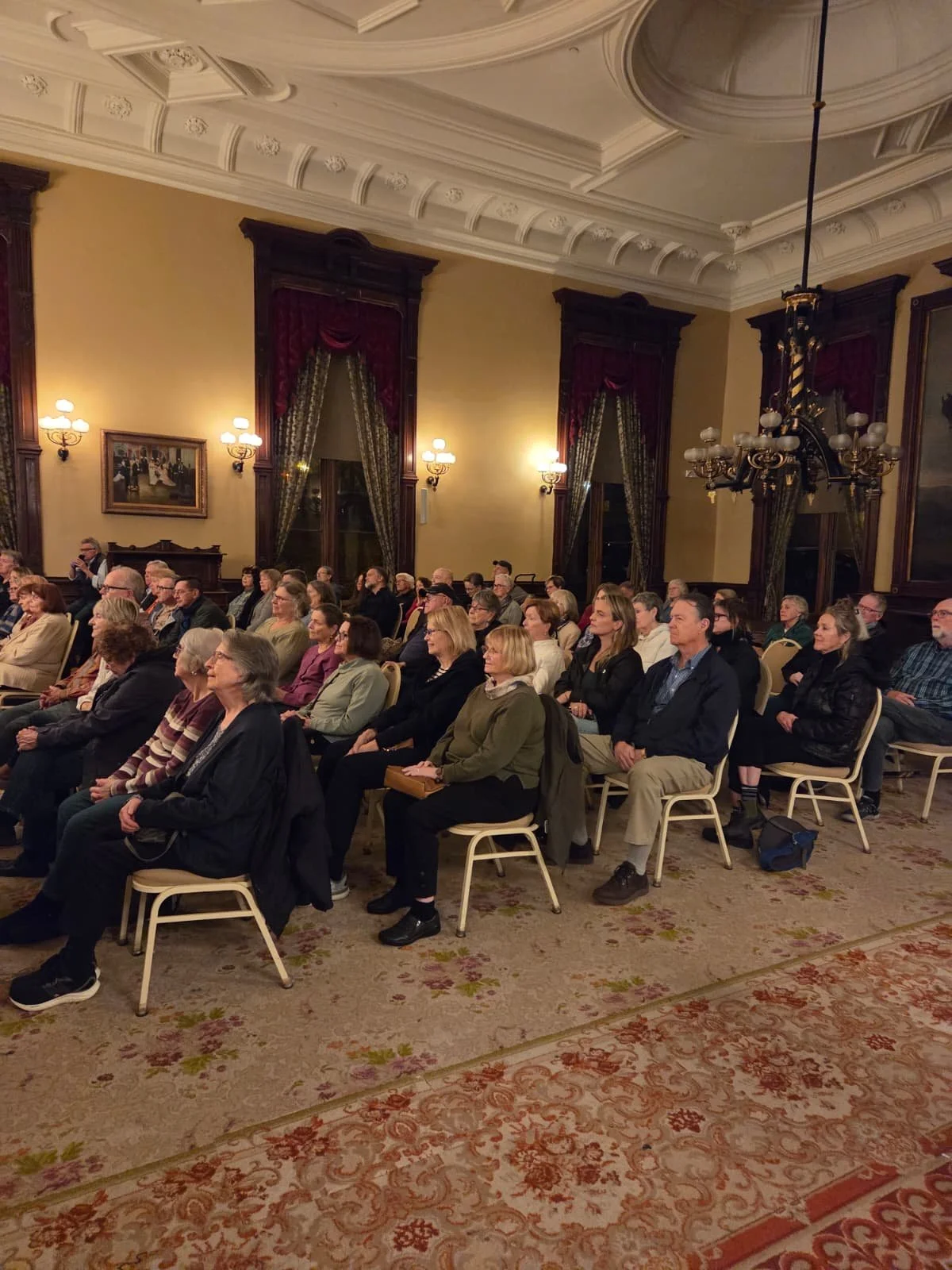
A Memorable Conclusion to a Remarkable Series
The evening concluded with readings from Katrina Trask's writings on peace, humanity, and the enduring struggle between destruction and creation.
The performance also featured a musical moment in which a verse written by Trask for the patriotic hymn America (My Country, 'Tis of Thee) was performed, with audience members joining in song.
In the final reading, an excerpt from her poem The Conquering Army, Trask contrasted the destruction of warfare with the constructive achievements of those working toward peace, progress, and human flourishing.
It was a fitting conclusion to an evening dedicated to a woman who believed deeply in the ability of individuals to create a more thoughtful, compassionate, and beautiful world.
The Saratoga Springs History Museum extends its sincere appreciation to Lezlie Dana and Rumara Jewett for bringing Katrina Trask's remarkable story to life, and to everyone who attended and supported this special series.
Watch the Full Performance on YouTube
Were you unable to attend, or would you like to experience the performance again?
The full recording of The Universality of Katrina Trask, presented on November 5, 2026, is available to watch on the Saratoga Springs History Museum's YouTube channel.
Discover Katrina Trask's extraordinary story through historical dialogue, original writings, and a performance that brings her voice and ideas to life.
🎥 Watch the full performance on YouTube!
While you're there, subscribe to the Saratoga Springs History Museum's YouTube channel to enjoy more recorded lectures, historical presentations, special programs, and fascinating stories from Saratoga Springs' past.
Support the Saratoga Springs History Museum
Programs like The Universality of Katrina Trask are part of the Museum's ongoing commitment to preserving, interpreting, and sharing the remarkable history of Saratoga Springs.
By becoming a Museum Member, you can enjoy complimentary admission to eligible lectures and special programs like this one while supporting the Museum's educational mission.
You can also make a donation to help sustain our exhibitions, collections, historical research, and public programming.
Become a Member or Make a Donation Today!
Together, we can continue bringing Saratoga Springs' extraordinary history to life for generations to come.