
History & Symbolism of Greenridge Cemetery
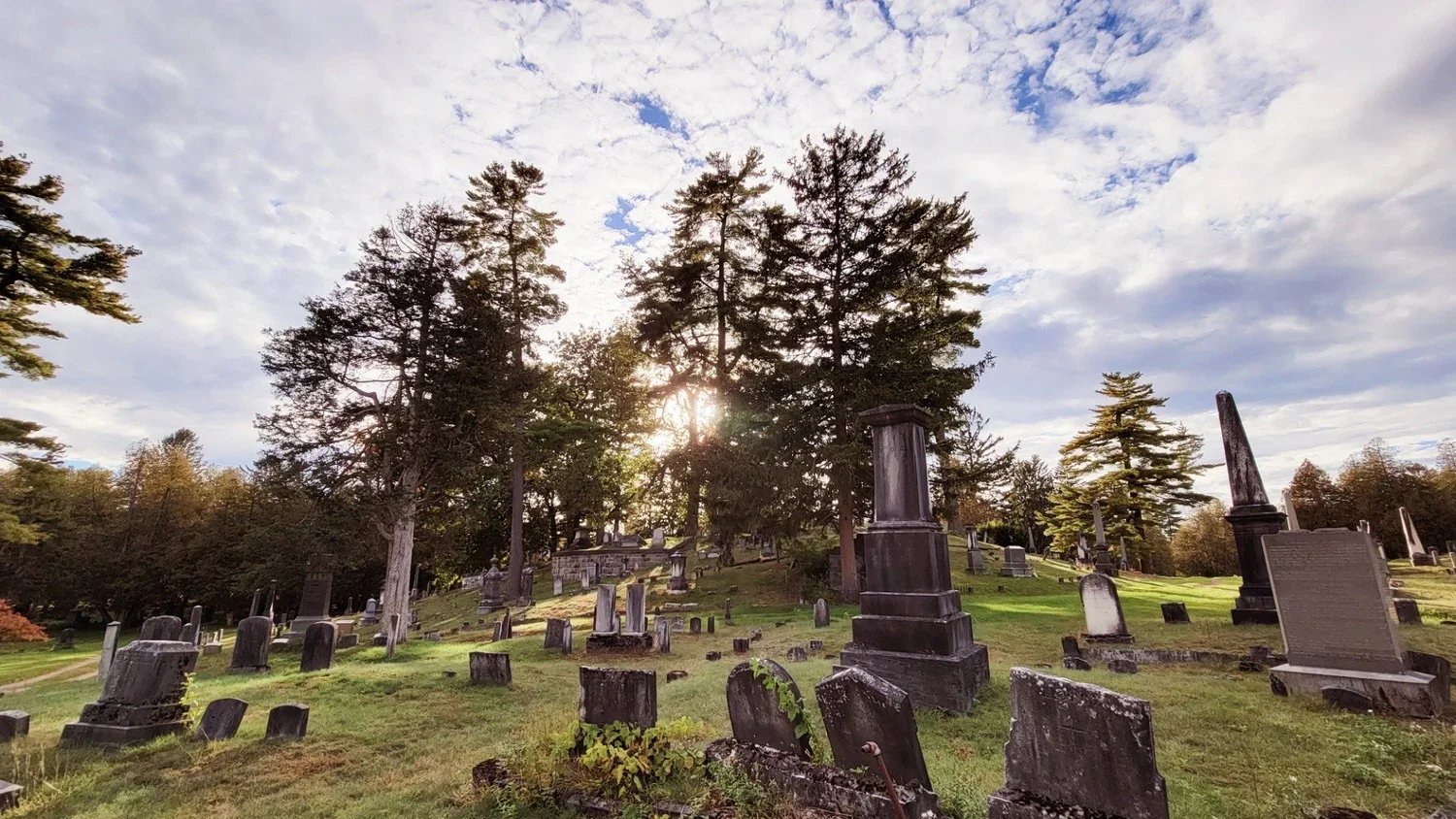
A Presentation by Jacqueline Bunge – July 27, 2023
On July 27, 2023, the Saratoga Springs History Museum welcomed guests for a truly captivating evening as Director of Education Jacqueline Bunge presented “History & Symbolism of Greenridge Cemetery.” Blending art history, local heritage, funerary symbolism, and a deep appreciation for 19th-century mourning culture, Jacqueline guided attendees through the fascinating stories carved into the stones of Saratoga’s most historic cemetery.
Greenridge Cemetery, consecrated in 1844, is a beautiful example of the 19th-century Rural Cemetery Movement—a shift toward creating park-like burial grounds designed for reflection, mourning, and community. Winding paths, shaded groves, and Victorian monuments together create a landscape where art, nature, and memory meet.
A Cemetery Full of Stories
Throughout her presentation, Jacqueline highlighted dozens of remarkable monuments and memorials, each presenting a unique window into Saratoga Springs’ past:
Victorian symbolism, from lilies to ivy, doves to torches, each revealing coded meanings of purity, immortality, peace, or resurrection.
The Civil War veterans memorial, honoring local soldiers who fought for the Union.
The tragic and poetic story of Willoughby S. McMillan, a young engineer whose train accident and symbolic gravestone remain one of Greenridge’s most poignant markers.
The use of photography in mourning traditions, including daguerreotypes and memorial imagery common throughout the Victorian period.
Tree-stump stones, lamb markers for children, and intricate carvings representing virtues, Christian iconography, and early American fraternal societies.
The extraordinary 19th-century mourning customs that shaped so many of the cemetery’s artistic traditions.
Jacqueline also explored the cemetery’s architectural gems, including the Gothic-style chapel built in 1880, the Egyptian Revival Bachelor Mausoleum, and delicate zinc “white bronze” markers—rare survivors of an era when funerary art was as creative as it was symbolic.
Local Legends & Notable Burials
Among the many names found in Greenridge, a few especially stand out:
Rabina “Ruby” Walworth, whose towering 40-foot obelisk is said by some to still carry her presence.
The Davidson Sisters, gifted young poets whose work was admired by literary giants like Henry Wadsworth Longfellow and Washington Irving.
Obed Coleman, the celebrated pianist whose cenotaph commemorates a life cut short at sea.
Colonel William L. Stone, the first Saratogian officially buried in Greenridge in 1844.
Each monument—whether a modest Lamb marker or a grand mausoleum—tells a story of its time, its customs, and the people who shaped Saratoga Springs.
A Grateful Acknowledgment
Jacqueline expressed her thanks to the many individuals who supported her research and enriched Greenridge Cemetery’s interpretation, including:
Gloria May, renowned for her exceptional cemetery tours.
Carol Waldron, a wellspring of knowledge who helps preserve the cemetery’s historical records.
Her colleagues at the museum—Jamie, Charlie, Scott, and Michael—for their encouragement and ongoing support.
Explore Greenridge Yourself
Greenridge Cemetery remains one of Saratoga’s most evocative historic landscapes, and Jacqueline’s presentation reminded us just how much meaning is hidden in its stones, symbols, and scenery.
For those eager to dive deeper, the Saratoga Springs History Museum regularly offers walking tours of Greenridge. These tours provide a guided look at the symbolism, art, and personal histories that make the cemetery such an extraordinary place.